

PODCAST: Executive Power and Civil Service Reform with Adam White and Clark Kelso Season 2 · Ep 38
0:00
2088
PODCAST: Executive Power and Civil Service Reform with Adam White and Clark Kelso Season 2 · Ep 38
News
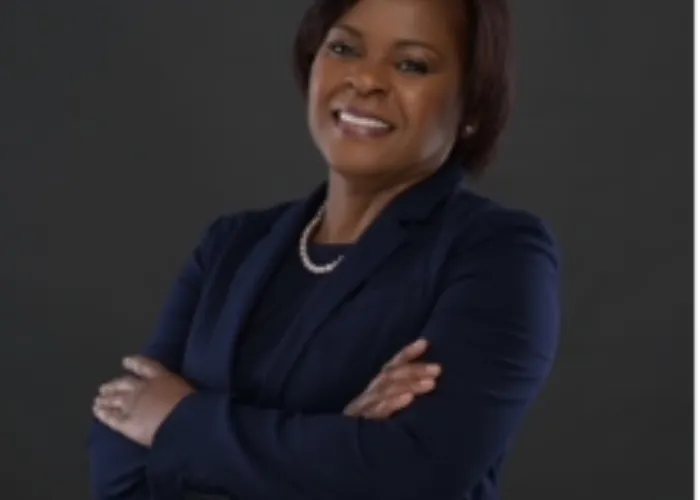
By Tom Carroll, NAPA Fellow 2022
Joyce Powdrill and I worked together as city managers in two Black-majority suburbs outside of Cincinnati, Ohio. While we had similar roles working as small-town city managers, we had very different backgrounds that led us into these positions. But our careers intersected and ran parallel in the last few years, allowing us to become dear friends and colleagues.
Joyce was the city manager of Lincoln Heights, a Black suburb north of Cincinnati with almost half of its population living below the poverty line. I was the city manager in Silverton, a Black majority working-class town that had its struggles to be sure but was more financially stable than Lincoln Heights.
Working together on the challenges facing our inner-ring suburbs, Joyce and I often found ourselves in the same meetings with other government officials, developers, non-profit leaders, and philanthropists. We made it our practice to come out of these meetings and debrief over a coffee or Bahn mi sandwich.
Even though we had literally just left the same meeting, Joyce and I learned through our discussions right afterwards that we were not truly in the same place. On too many occasions, Joyce picked up on micro-aggressions that I had completely missed. We laughed together once I picked up my jaw from the coffee table after she translated for me the offensive message she had heard clear as a bell but I just missed. Other times, I was able to decipher what she called “white man speak” for her. This helped Joyce to know exactly what a white male developer was asking her to do for Lincoln Heights.
The time Joyce and I spent learning what the other took away from our shared meetings enriched both of us. We taught each other how to hear what the other person’s ears and see with the other person’s eyes. Joyce and I built fluency in the other’s vernacular. With a shared assumption of good intent, we were able to pierce through the cultural taboos that most Americans simply can’t talk about.
Joyce’s work for Lincoln Heights provided me with the best-case study I have found to explore the contours of structural racism in the United States. Public policy decisions made more than 75 years ago impact Lincoln Heights to the present day. It is impossible for me to unsee structural racism after learning about this community.
A simple decision about where to draw a boundary line made by three county commissioners in the 1940s put a major aircraft engine plant in Evendale, Ohio instead of Lincoln Heights. Today, Evendale collects 40 times more local income tax than the Village of Lincoln Heights. Evendale enjoys Cadillac police and fire protection. Its recreation and community centers are new and modern, and almost free to use for its residents. In contrast, Lincoln Heights disbanded its police department a few years ago and today relies on the county sheriff for police patrol.
This tale of two cities was set in motion by racist policy decisions made by county commissioners right after World War II. One could assume without this historical knowledge that Evendale is simply well governed and Lincoln Heights is not. But today Evendale earns more interest income revenue annually on its treasury than Lincoln Heights collects in local income tax in a given year. Governance is a lot easier when you have a reliable, massive tax base going back to the Truman administration.
In the late 1950s and 1960s, I-75 was punched through Lincoln Heights and further separated it from Evendale. The U.S. Department of Transportation is just now coming to grips with the way our interstate highways—our nation’s economic arteries—cut through and dismembered communities of color.
Since 1947, the City of Cincinnati’s police firing range has been located just north of Lincoln Heights. Lincoln Heights residents feel like they live in a war zone as they hear gunfire popping off for hours on end during police training exercises. Fortunately, local and federal officials are on the brink of relocating this shooting range.
These are just three historical examples of public policy decisions made decades ago impacting Lincoln Heights to this day. There are many more. The historical record is clear that these decisions were racially discriminatory both in intent and in effect. The residents of Lincoln Heights had no say in these decisions. And once these decisions were made, undoing the damage costs millions more. It is no wonder that Cincinnati is reluctant to spend over $35 million to relocate a perfectly functional training facility. We should not be surprised that Evendale does not even ponder sharing its income tax revenue with Lincoln Heights when the aircraft engine plant has been in Evendale since years before anyone governing Evendale today was born.
Lincoln Heights is one of America’s forgotten places, hidden in plain sight along I-75. It is the oldest self-governing African American community north of the Mason Dixon line. Lincoln Heights gave America treasures like the Isley Brothers and Nikki Giovanni. But it also gives us a part of American history many of us don’t want to learn about, let alone redress.
Joyce and I have both moved on from our city manager positions serving Lincoln Heights and Silverton, respectively. Joyce is now working for United States Senator Sherrod Brown, organizing constituent services in Southwest Ohio. Joyce helped me see the world differently, to learn a history I had never known about, and to approach meetings with a different perspective. I count Joyce Powdrill as one of my most important mentors. I am forever enriched by her friendship. I am honored to celebrate her in Black history month as a contemporary American hero.
Article Details
Keep Reading